AC Emergency Restoration Little Ferry
📞 201-510-5457
24/7 Emergency Response

Water Damage Restoration in Little Ferry.

Active water damage in Little Ferry? We extract, dry, document, and rebuild — one accountable crew, one Xactimate scope, no handoff to a separate contractor.

Local team in Little Ferry Honest, transparent pricing 24/7 emergency line
NJ-Local Crew dispatched from Little Ferry
Documented Daily moisture logs + Xactimate scopes
Single Source Mitigation through reconstruction
Service Overview

How We Approach It

Water damage is the most common emergency we handle in Little Ferry. The visible water is the easy part. The damage that costs the most happens behind drywall, under flooring, and inside cavities you cannot see.

What's Included

  • 24/7 emergency dispatch
  • Truck-mounted extraction
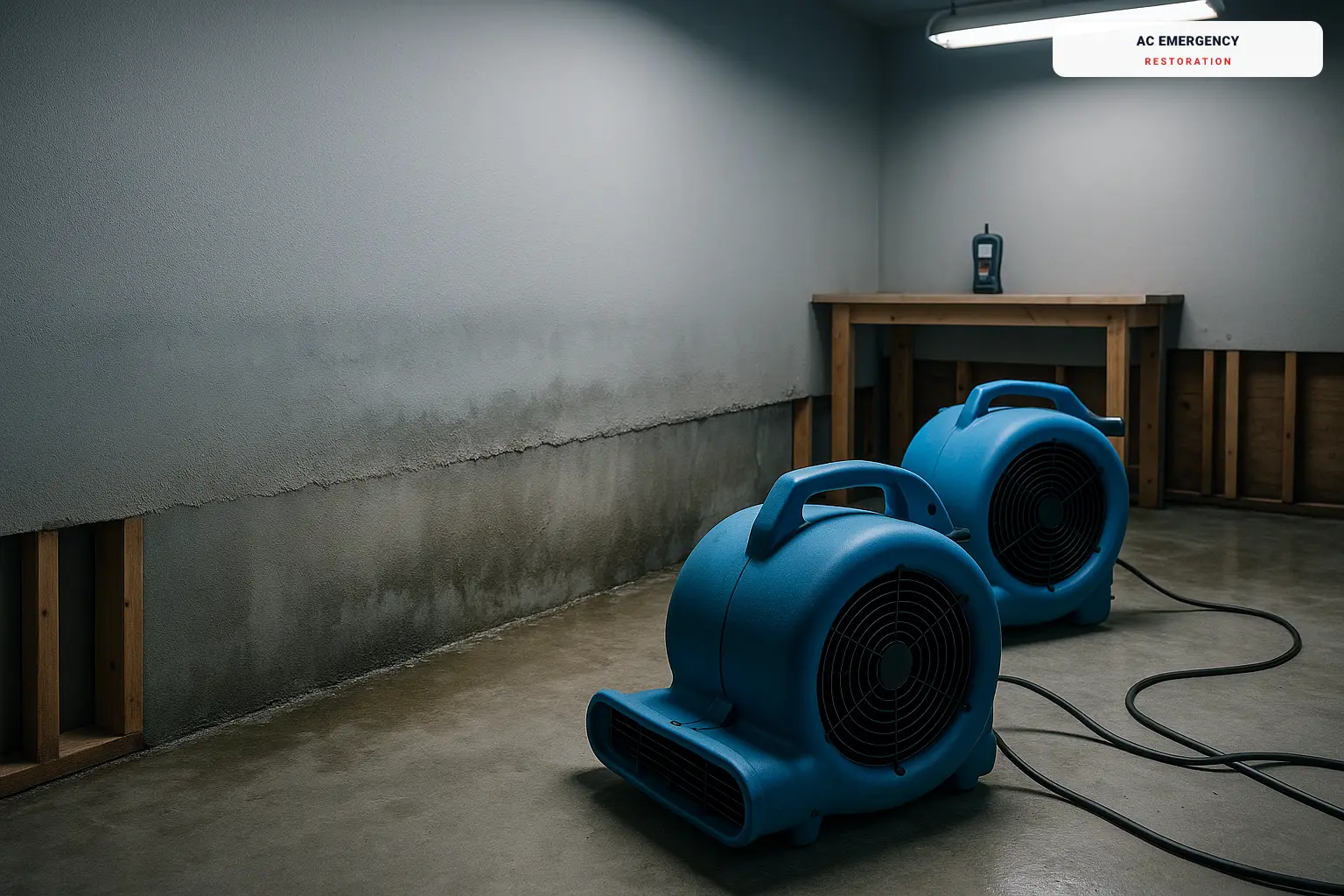
  • Industrial drying equipment
  • Daily moisture documentation
  • Insurance scope-aligned reconstruction
  • IICRC S500 protocol

Why Cutting Drying Short Is the Most Expensive Mistake

The single most common pattern that turns a $5,000 mitigation into a $40,000 mold remediation: a contractor who says "looks dry, we are done" at day three when the meter still reads above standard. Six weeks later, mold growth appears behind the wall, the carrier opens a separate claim or denies it as "improper drying," and the homeowner pays out of pocket.

Our protocol: equipment runs until every monitored substrate hits the dry standard documented for that specific material. If readings stall — which happens for hardwood + dense materials — we reposition equipment, add desiccant dehumidification if needed, and extend the run. Average residential job: 3-5 days. Hardwood-heavy jobs in older Little Ferry homes: sometimes 7-10 days. We give an honest timeline at the start and update if conditions change.

What this means for your insurance claim: every day of drying gets logged with equipment count + moisture readings. Adjusters see a complete record. No questions later about whether the job was completed properly. Mold prevention happens during drying — not after — and the documentation backs that up.

How Water Damage Restoration Actually Works

The work breaks into three distinct phases: extraction, drying, and reconstruction. Each phase has clear technical standards that good restorers follow and bad ones cut corners on. Knowing what to expect at each stage is the difference between a smooth claim and a months-long argument with the carrier.

Extraction. Standing water gets removed first with truck-mounted vacuum equipment. Visible water on hard surfaces is the simple part. The bigger job is pulling moisture out of carpet pad, subfloor, and the inside of wall cavities. We use weighted rovers, water claws, and probe meters to confirm what is wet underneath the surface.

Drying. Industrial air movers create cross-ventilation across affected materials while LGR dehumidifiers pull moisture out of the air. We map moisture readings every 24 hours and reposition equipment based on what is actually drying versus what is stalled. Standard residential drying runs 3 to 5 days. Cutting it short is how mold problems start six weeks later.

Reconstruction. Drywall, flooring, paint, and trim are restored to pre-loss condition. Same crew, one phone number, one accountable team from first call to final walk-through. The Xactimate scope from mitigation maps directly to the rebuild scope — no separate negotiation with a different contractor.

Process

Our Process

  1. 01

    You Call

    A real person answers 24/7. We get the address, the situation, what equipment to load. Two minutes max on the call.

  2. 02

    We Roll

    Truck heads out within minutes for active losses. Standard target is on-site within 60 minutes anywhere in our Little Ferry footprint.

  3. 03

    Stop the Damage

    Water out, contaminated material removed, drying gear deployed, affected areas sealed off. The first 24 hours decide whether the loss stays small.

  4. 04

    Dry It Right

    Air movers + dehumidifiers run for 3-5 days. We log moisture readings daily, reposition equipment until every wet substrate hits the dry standard.

  5. 05

    Put It Back

    Same crew that pulled out the wet drywall puts the new drywall back. One contract from first call to final walk-through.

24/7 Emergency

Pipe burst, basement filling up, smoke damage — call our Little Ferry dispatch now.

We dispatch a tech 24/7 across the Little Ferry metro. Average on-site time is under an hour.

Call 201-510-5457
The difference

Why Customers Choose Us

Real reasons. No invented stats, no manufactured awards.

  • 01

    Carrier-Recognized Scopes

    NJM, Travelers, State Farm, Allstate, Liberty Mutual, Chubb — our scope formats match what their adjusters expect. Faster claim cycles, fewer callbacks, less friction between us and the adjuster paying for the work.

  • 02

    No Storm-Chase Tactics

    No unsolicited door-knocking after weather events. No Assignment of Benefits paperwork. No predatory "insurance pays — no cost to you" pitches. The work speaks for itself.

  • 03

    Reconstruction Done Right

    Drywall, flooring, paint, cabinetry, trim — handled by the same crew that did the dry-out. Specialty trades (plaster, hardwood, custom millwork) coordinated by us. You do not manage five sub-contractors.

Service Area

Serving Bergen County

From our Little Ferry base we cover Bergen County and the immediately surrounding NJ municipalities. Sub-hour response on active losses, pre-staged equipment for storm season, IICRC-standard methodology applied to every job regardless of size.

Counties Covered

  • Bergen County, NJ

Cities We Service

Each Bergen city below opens a local page with arrival times from our Little Ferry base and the loss patterns we handle most often in that municipality.

Not sure if you're in our area? Call 201-510-5457 and we'll tell you in 30 seconds.
FAQ

Frequently Asked Questions

If you don't see your question, just call or message us.

What is the difference between mitigation and reconstruction? +

Mitigation is the emergency phase — stopping the loss, extracting water, drying the structure, removing damaged material. Reconstruction is the rebuild — replacing drywall, installing flooring, painting, finishing. Many restorers only do mitigation and hand the rebuild to a separate general contractor, which often creates scope-coordination problems. We do both as one contract so the rebuild matches what was scoped during mitigation.

Can I clean up the water myself before you arrive? +

You can extract surface water with a wet/dry vacuum and start moving content away from the cascade path — those help. Do not lift wet drywall (it crumbles and makes cleanup harder), do not run heaters trying to dry it yourself (you drive moisture deeper into materials), and do not throw damaged contents away before we document for insurance. The 30-60 minutes between your call and our arrival are worth using for documentation, not partial demo.

How long does a fire restoration job typically take? +

A small contained fire with smoke damage but no structural rebuild: 2-4 weeks. A significant fire requiring partial structural reconstruction: 6-12 weeks. A total loss requiring full rebuild: 4-9 months. The timeline depends on scope, material lead times, and insurance approval cycle. We give a realistic week-by-week schedule at the start.

What is a backwater valve and do I need one? +

A backwater valve is a one-way valve installed in your main lateral drain that closes if sewer pressure tries to push water back into your basement. Cost is $1,500-$3,500 installed. For Little Ferry properties on combined sewer or older municipal systems, it is the single most effective sewer-backup prevention measure. We can refer to qualified plumbers if you want one installed.

How do you remove smoke odor after a fire? +

Smoke odor lives in porous materials at the molecular level — air freshener does not work. We use hydroxyl generators (safe for occupied spaces, breaks down VOCs over 3-7 days), ozone treatment (faster, requires evacuation), thermal fogging, and source removal for materials that cannot be deodorized. Air quality testing verifies odor levels return to baseline before reconstruction.

Does insurance cover sewer backup? +

Standard homeowners insurance does NOT cover sewer backup. The fix is a sewer/water backup endorsement on your policy, typically $50-150/year. Coverage is usually $5,000-$25,000 depending on the limit you select. If you have not added the endorsement, the cleanup is out-of-pocket. Add it now to protect against future events.

What should I do in the first hour of a water emergency? +

Shut off the water at the main if you can locate the source. Kill power to the affected area at the breaker if water is reaching outlets. Move what you can save away from the cascade path. Photograph the loss in its current state for insurance. Then call us — we are mobilizing while you are still on the phone.

Call Now • Little Ferry

Property Damage in Little Ferry? We Are on Site Inside the Hour.

One phone call gets a truck rolling. Real Little Ferry team, real local response time, no automated phone tree. We'll be on site fast.

📞 Tap To Call 201-510-5457

24/7 Emergency Dispatch

📞 Call 201-510-5457