AC Emergency Restoration Little Ferry
📞 201-510-5457
24/7 Emergency Response

Water Damage Restoration in Little Ferry, NJ — IICRC-Standard, Single Source.

Active-loss restoration crew dispatched from Little Ferry. Bergen County response inside the hour. Insurance-aligned scopes, no AOB games, work explained in plain language.

Local team in Little Ferry Honest, transparent pricing 24/7 emergency line
NJ-Local Crew dispatched from Little Ferry
Documented Daily moisture logs + Xactimate scopes
Single Source Mitigation through reconstruction
Emergency Restoration

Mitigation Through Reconstruction — One Little Ferry Crew, One Contract.

Water Damage Restoration

24/7

Active water damage in Little Ferry? We extract, dry, document, and rebuild — one accountable crew, one Xactimate scope, no handoff to a separate contractor.

  • 24/7 emergency dispatch
  • Truck-mounted extraction
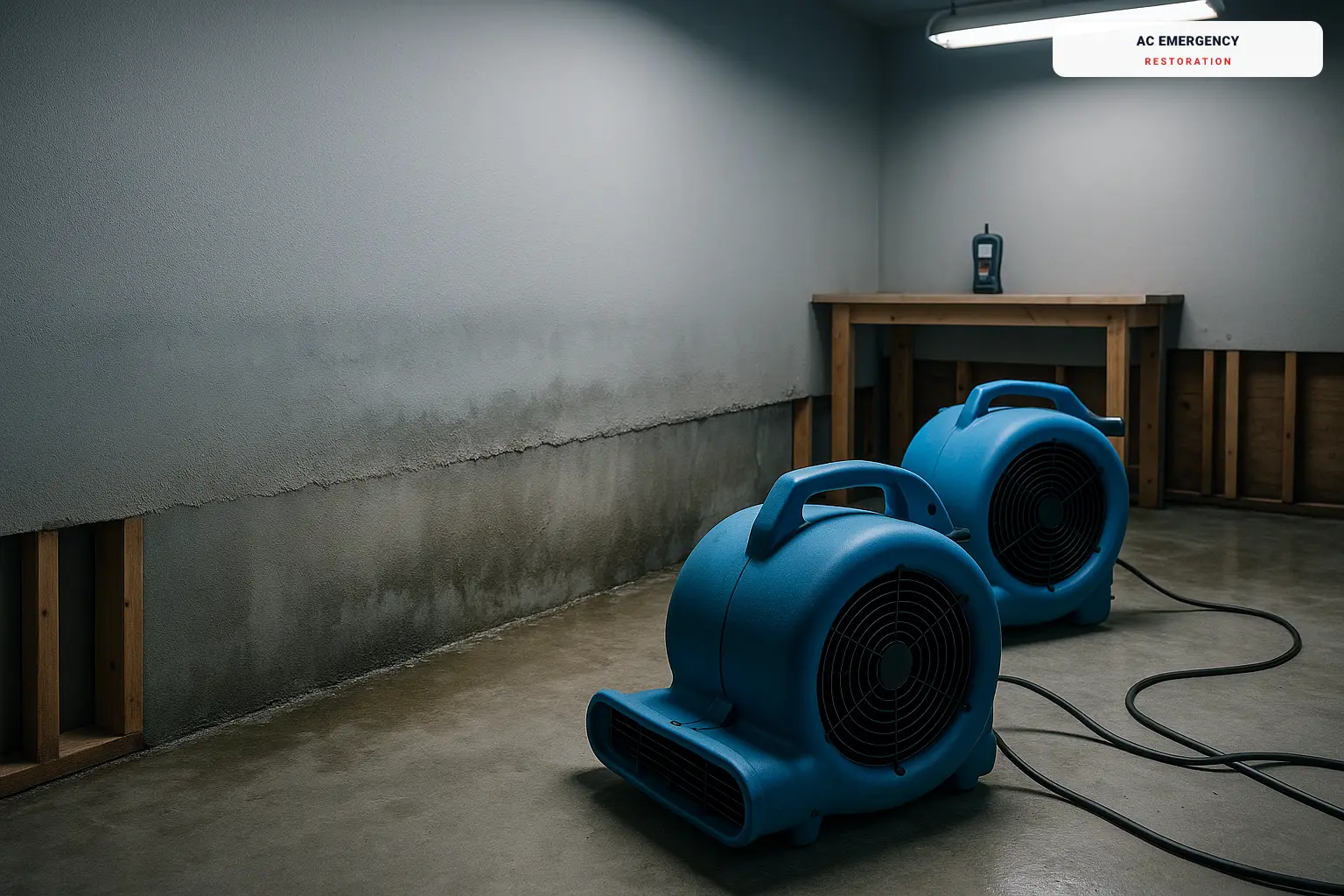
  • Industrial drying equipment
Learn more

Fire Damage Restoration

24/7

IICRC S700 protocol applied to Bergen County fire and smoke losses. Char removal, ozone or hydroxyl odor neutralization, full reconstruction.

  • Soot + smoke odor removal
  • HVAC decontamination
  • Pack-out + content cleaning
Learn more

Storm Damage Restoration

24/7

Storm response across Bergen County — tarping, board-up, wind-driven water extraction, and the rebuild work that follows each named event.

  • Emergency board-up + tarping
  • Wind-driven rain water extraction
  • Roof + envelope repair
Learn more

Mold Remediation

Post-remediation clearance testing matters as much as the remediation itself. Our protocol documents both, so you can prove the property is restored.

  • IICRC S520 protocol
  • Negative-air containment
  • HEPA filtration
Learn more

Sewage Cleanup

24/7

IICRC S500 Category-3 protocol for sewage backup events — full PPE, porous-material removal, decontamination.

  • IICRC S500 Cat-3 protocol
  • Full Tyvek + HEPA respirator PPE
  • Porous-material removal to flood line
Learn more

Reconstruction

The rebuild is where most restoration jobs slip schedule. Same-crew model means no waiting on a separate contractor to fit you in.

  • Drywall replacement + finish
  • Hardwood, LVP, tile, carpet flooring
  • Cabinetry + trim work
Learn more
24/7 Emergency

Pipe burst, basement filling up, smoke damage — call our Little Ferry dispatch now.

We dispatch a tech 24/7 across the Little Ferry metro. Average on-site time is under an hour.

Call 201-510-5457
The difference

Why Customers Choose Us

Real reasons. No invented stats, no manufactured awards.

  • 01

    Carrier-Recognized Scopes

    NJM, Travelers, State Farm, Allstate, Liberty Mutual, Chubb — our scope formats match what their adjusters expect. Faster claim cycles, fewer callbacks, less friction between us and the adjuster paying for the work.

  • 02

    No Storm-Chase Tactics

    No unsolicited door-knocking after weather events. No Assignment of Benefits paperwork. No predatory "insurance pays — no cost to you" pitches. The work speaks for itself.

  • 03

    Reconstruction Done Right

    Drywall, flooring, paint, cabinetry, trim — handled by the same crew that did the dry-out. Specialty trades (plaster, hardwood, custom millwork) coordinated by us. You do not manage five sub-contractors.

Local Guide

Little Ferry Restoration — What You Need to Know

Active-loss restoration crew dispatched from Little Ferry. Bergen County response inside the hour. Insurance-aligned scopes, no AOB games, work explained in plain language.

Insurance-billed Restoration for Nj Homeowners — How the Process Actually Works

Most of our Little Ferry work is insurance-billed. The process is straightforward when handled by a restorer who knows the carrier conversation: open the claim with your insurer, get the claim number, share the claim number with our dispatch, and we handle the rest of the carrier coordination on your behalf.

Specifically: we write the Xactimate scope at carrier-standard pricing for NJ, submit it to your assigned adjuster, walk through the scope on the on-site adjuster visit (if you want us present, which we recommend), document the mitigation and reconstruction work with photos and moisture logs throughout, submit supplements for any conditions discovered during the work that warrant additional scope, and bill the carrier directly when authorized.

Your direct involvement in the carrier conversation is minimal — you sign authorization for direct billing on the first visit, then we handle the rest. Your out-of-pocket cost is your deductible (and any items you choose to upgrade beyond pre-loss condition). Most claims close within 30-60 days from open to final payment for standard residential losses; longer for complex multi-unit or premium-finish losses.

The carriers we work with regularly in NJ: NJM, State Farm, Allstate, Liberty Mutual, Travelers, Progressive, Chubb, plus most regional carriers serving the Bergen County market.

When Reconstruction Should Match Pre-loss Condition (And When It Should Not)

Insurance reconstruction puts your Little Ferry property back to pre-loss condition. Not better, not worse — pre-loss. That's the standard, that's what the carrier pays for, and that's what our reconstruction scope delivers by default. But there are scenarios where the homeowner sensibly wants to upgrade during the rebuild, and the timing creates an opportunity worth taking.

The case for upgrading: the contractor is already on-site, the demo work is already done, the framing is already exposed, and disruption to daily life is already happening. Adding upgrades to the rebuild scope adds incremental cost but doesn't add new disruption. Common upgrade decisions during reconstruction: replacing carpet with LVP or hardwood, upgrading kitchen cabinet level, adding under-cabinet lighting, replacing toilet/vanity, repainting adjacent unaffected rooms to a fresh color.

The case for staying with pre-loss: the insurance scope covers what the loss damaged. Upgrades are out-of-pocket. If cash flow is tight, defer upgrades to a future remodel project. If the timing is wrong (you're planning to sell within 12-18 months), upgrade ROI may not justify the cost.

We quote upgrades as separate line items on top of the insurance scope so you can decide whether the timing makes sense. Either way, the insurance work proceeds at carrier-approved scope and pricing.

Property Restoration for Little Ferry Single-family, Multi-family, and Commercial Buildings

Our scope covers the full property type spectrum across Bergen County — single-family residential (the bulk of our work), multi-family condos and townhouses (with per-unit documentation discipline), and small-to-mid commercial (office, retail, medical, light industrial). Different property types call for different operational tempo, but the IICRC-standard methodology is consistent across all.

Single-family residential: standard 24/7 dispatch, sub-hour response, mitigation through reconstruction as one contract. Most Little Ferry residential losses fall into a handful of patterns we handle every week: water damage from supply line failures, storm intrusion through damaged building envelopes, sewer backup in basements, kitchen fire smoke damage. Predictable scopes, predictable timelines.

Multi-family + condo: same scope plus building-management coordination, COI compliance, after-hours access protocols, per-unit Xactimate documentation for separate HO-6 carriers alongside master-policy summaries for the building. We're pre-cleared for vendor approval at most major Bergen County multi-unit complexes.

Commercial: tenant-operations-first scheduling, property-manager-friendly communication (work orders, weekly status summaries, COI tracker compliance), $5M COI capability when needed, after-hours noise-managed equipment runs. Carriers we work with on the commercial side: CNA, Hartford, Liberty Mutual, Travelers, Chubb on higher-end accounts.

How to Tell a Good Restorer From a Bad One

The restoration industry is unregulated in most NJ contexts — anyone with a truck and a wet/dry vac can claim to do this work. Differentiating qualified restorers from the rest takes a few specific questions that good contractors answer easily and bad ones can't.

What to ask any restorer before you sign anything:

  • What IICRC certifications do you hold? WRT for water, S500 firm certification, AMRT for mold, FSRT for fire. Verify at iicrc.org — takes 30 seconds.
  • How do you document moisture readings? Good answer: calibrated meter, building diagram, daily readings logged. Bad answer: vague or hedging.
  • What scope format do you submit to the carrier? Good answer: Xactimate with line-item pricing. Bad answer: invoice format, lump-sum estimates.
  • What's your stance on AOB paperwork? Good answer: we don't require it. Bad answer: pushback or "everyone does it."
  • Who handles the reconstruction phase? Good answer: same crew, single contract. Bad answer: handed to a separate general contractor after mitigation.

The restorers who answer these questions clearly are the ones whose work holds up and whose claims close cleanly. The ones who hedge or change the subject are the ones who produce work that fails inspection or generates carrier disputes. Little Ferry property owners deserve the qualified version.

Emergency Water Damage, Fire Restoration, and Mold Remediation Services Throughout Bergen County

Our Little Ferry dispatch covers the full Bergen County restoration footprint — Moonachie, Ridgefield Park, Hackensack, Teterboro, and the smaller municipalities throughout the county. Average arrival time on emergency calls is under an hour. Pre-staged equipment for known surge periods (winter freeze events, named storms, summer thunderstorm season) means individual response times don't slip even when call volume spikes across the corridor.

Standard residential services: 24/7 emergency water damage extraction and structural drying, fire and smoke restoration including content pack-out and HVAC decontamination, mold remediation per IICRC S520 protocol, Cat-3 sewage cleanup with full PPE and air-quality verification, and full reconstruction following any of these. Commercial services: same scope with property-management coordination, after-hours noise scheduling, and larger COI capability.

Insurance work is the bulk of what we do. We handle direct billing to most major carriers operating in the NJ market, write Xactimate scopes that adjusters approve without back-and-forth, and manage the full claim cycle including supplements when discovered conditions warrant additional scope. The result for the homeowner: less direct involvement in the carrier conversation, faster claim resolution, and one accountable team from first call to final walkthrough.

Process

How It Works

  1. 01

    You Call

    A real person answers 24/7. We get the address, the situation, what equipment to load. Two minutes max on the call.

  2. 02

    We Roll

    Truck heads out within minutes for active losses. Standard target is on-site within 60 minutes anywhere in our Little Ferry footprint.

  3. 03

    Stop the Damage

    Water out, contaminated material removed, drying gear deployed, affected areas sealed off. The first 24 hours decide whether the loss stays small.

  4. 04

    Dry It Right

    Air movers + dehumidifiers run for 3-5 days. We log moisture readings daily, reposition equipment until every wet substrate hits the dry standard.

  5. 05

    Put It Back

    Same crew that pulled out the wet drywall puts the new drywall back. One contract from first call to final walk-through.

Service Area

Serving Bergen County

From our Little Ferry base we cover Bergen County and the immediately surrounding NJ municipalities. Sub-hour response on active losses, pre-staged equipment for storm season, IICRC-standard methodology applied to every job regardless of size.

Counties Covered

  • Bergen County, NJ

Cities We Service

Each Bergen city below opens a local page with arrival times from our Little Ferry base and the loss patterns we handle most often in that municipality.

Not sure if you're in our area? Call 201-510-5457 and we'll tell you in 30 seconds.
FAQ

Frequently Asked Questions

If you don't see your question, just call or message us.

What is the difference between mitigation and reconstruction? +

Mitigation is the emergency phase — stopping the loss, extracting water, drying the structure, removing damaged material. Reconstruction is the rebuild — replacing drywall, installing flooring, painting, finishing. Many restorers only do mitigation and hand the rebuild to a separate general contractor, which often creates scope-coordination problems. We do both as one contract so the rebuild matches what was scoped during mitigation.

Can I clean up the water myself before you arrive? +

You can extract surface water with a wet/dry vacuum and start moving content away from the cascade path — those help. Do not lift wet drywall (it crumbles and makes cleanup harder), do not run heaters trying to dry it yourself (you drive moisture deeper into materials), and do not throw damaged contents away before we document for insurance. The 30-60 minutes between your call and our arrival are worth using for documentation, not partial demo.

How long does a fire restoration job typically take? +

A small contained fire with smoke damage but no structural rebuild: 2-4 weeks. A significant fire requiring partial structural reconstruction: 6-12 weeks. A total loss requiring full rebuild: 4-9 months. The timeline depends on scope, material lead times, and insurance approval cycle. We give a realistic week-by-week schedule at the start.

What is a backwater valve and do I need one? +

A backwater valve is a one-way valve installed in your main lateral drain that closes if sewer pressure tries to push water back into your basement. Cost is $1,500-$3,500 installed. For Little Ferry properties on combined sewer or older municipal systems, it is the single most effective sewer-backup prevention measure. We can refer to qualified plumbers if you want one installed.

How do you remove smoke odor after a fire? +

Smoke odor lives in porous materials at the molecular level — air freshener does not work. We use hydroxyl generators (safe for occupied spaces, breaks down VOCs over 3-7 days), ozone treatment (faster, requires evacuation), thermal fogging, and source removal for materials that cannot be deodorized. Air quality testing verifies odor levels return to baseline before reconstruction.

Does insurance cover sewer backup? +

Standard homeowners insurance does NOT cover sewer backup. The fix is a sewer/water backup endorsement on your policy, typically $50-150/year. Coverage is usually $5,000-$25,000 depending on the limit you select. If you have not added the endorsement, the cleanup is out-of-pocket. Add it now to protect against future events.

What should I do in the first hour of a water emergency? +

Shut off the water at the main if you can locate the source. Kill power to the affected area at the breaker if water is reaching outlets. Move what you can save away from the cascade path. Photograph the loss in its current state for insurance. Then call us — we are mobilizing while you are still on the phone.

Call Now • Little Ferry

Property Damage in Little Ferry? We Are on Site Inside the Hour.

One phone call gets a truck rolling. Real Little Ferry team, real local response time, no automated phone tree. We'll be on site fast.

📞 Tap To Call 201-510-5457

24/7 Emergency Dispatch

📞 Call 201-510-5457